Safe & Compliant Commercial Tree Removal in Somerville
Commercial Tree Removal Somerville
Commercial tree removal in Somerville presents a unique set of regulatory challenges, safety compliance considerations, and permitting and licensing requirements that are distinct from those encountered in residential tree care. Throughout Somerville’s commercial district areas, including the high-traffic Assembly Row area as well as the long-established Davis Square and Union Square areas, property managers and business owners must be aware of both local city ordinances and federal workplace safety standards for their tree removal work to be completed successfully and safely with respect to their employees, property, and the surrounding communities. Successful completion of these projects is directly related to proper planning and professional execution by a qualified arborist or contractor.
Somerville’s Commercial Tree Removal Regulations
All commercial properties in Somerville are subject to the City’s Tree Preservation Ordinance, which mandates a permit before the removal of any tree with an eight-inch diameter at breast height (DBH) or larger. While there are less stringent requirements placed upon residential homeowners compared to commercial property owners, the regulations do mandate that property owners must either replant or pay the City $600 per caliper-inch of tree removed into the City’s Tree Fund. These regulations cover all commercial development, office buildings, and multi-unit residential properties with four or more units.
Special Permit Process
The special permit process for commercial tree removal is governed by the City’s Tree Warden and may also require review of the Urban Forestry Committee. There may be additional scrutiny of projects located in environmentally sensitive areas, such as along the Mystic River or historic districts surrounding Prospect Hill. As part of the permit application process, commercial tree removal will require detailed plans prepared by licensed land surveyors or landscape architects that include existing significant trees and proposed replacement plantings.
Emergency Removal Authorization
If a tree poses an imminent threat to the health and safety of the public, damages a building, or threatens to cause damage during a severe weather event, emergency removal may be allowed without obtaining a permit. However, all emergency removals must be authorized by the Tree Warden either verbally or in writing. Additionally, the property owner must document the hazard and immediately notify the City at trees@somervillema.gov or 311.
Federal Safety Compliance Requirements
OSHA Standards for Commercial Operations
Regardless of the ultimate use of the wood, all commercial tree-removal operations must comply with OSHA’s Logging Operations Standard (29 CFR 1910.266). In addition to requirements regarding personal protective equipment, machinery safety, electrical-hazard protection, and worker training, commercial tree removal in Somerville presents numerous challenges related to the proximity of commercial areas to buildings, utilities, and pedestrians.
Fall Protection Systems
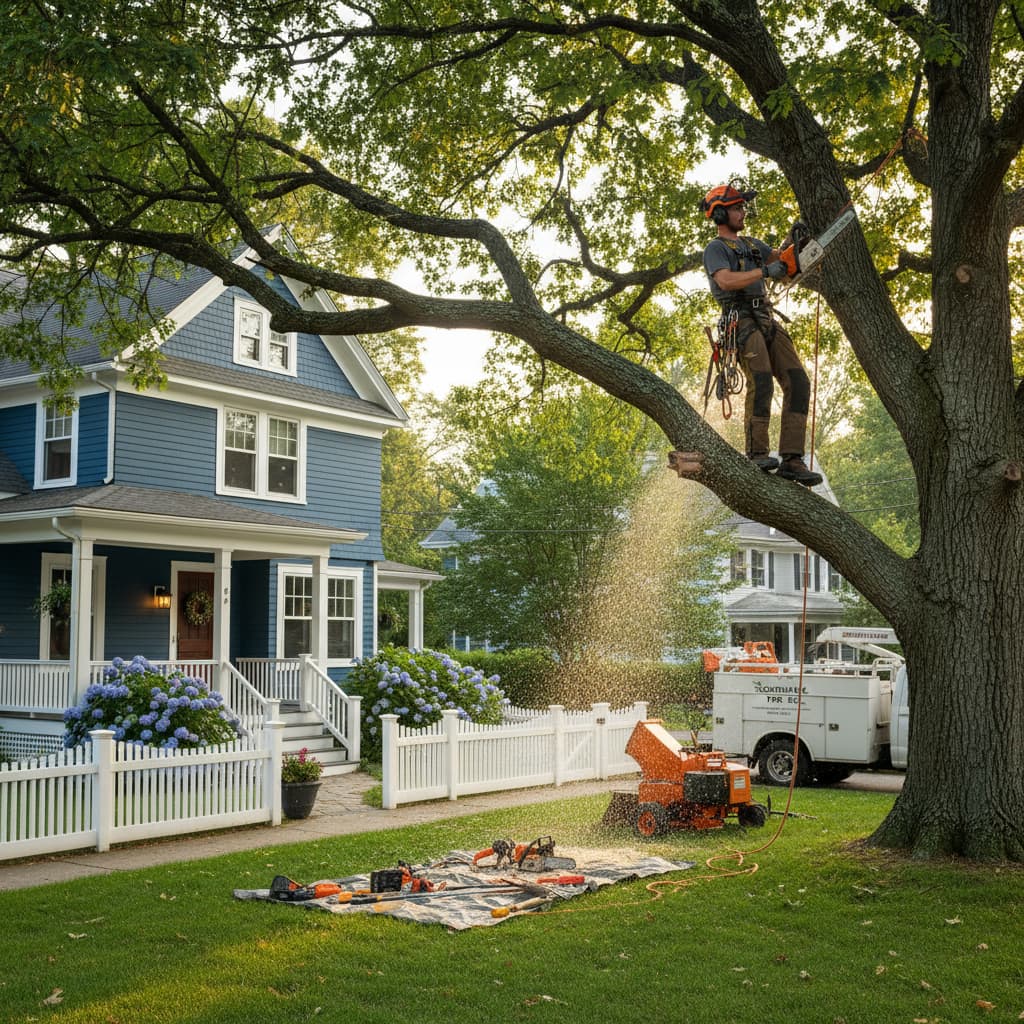
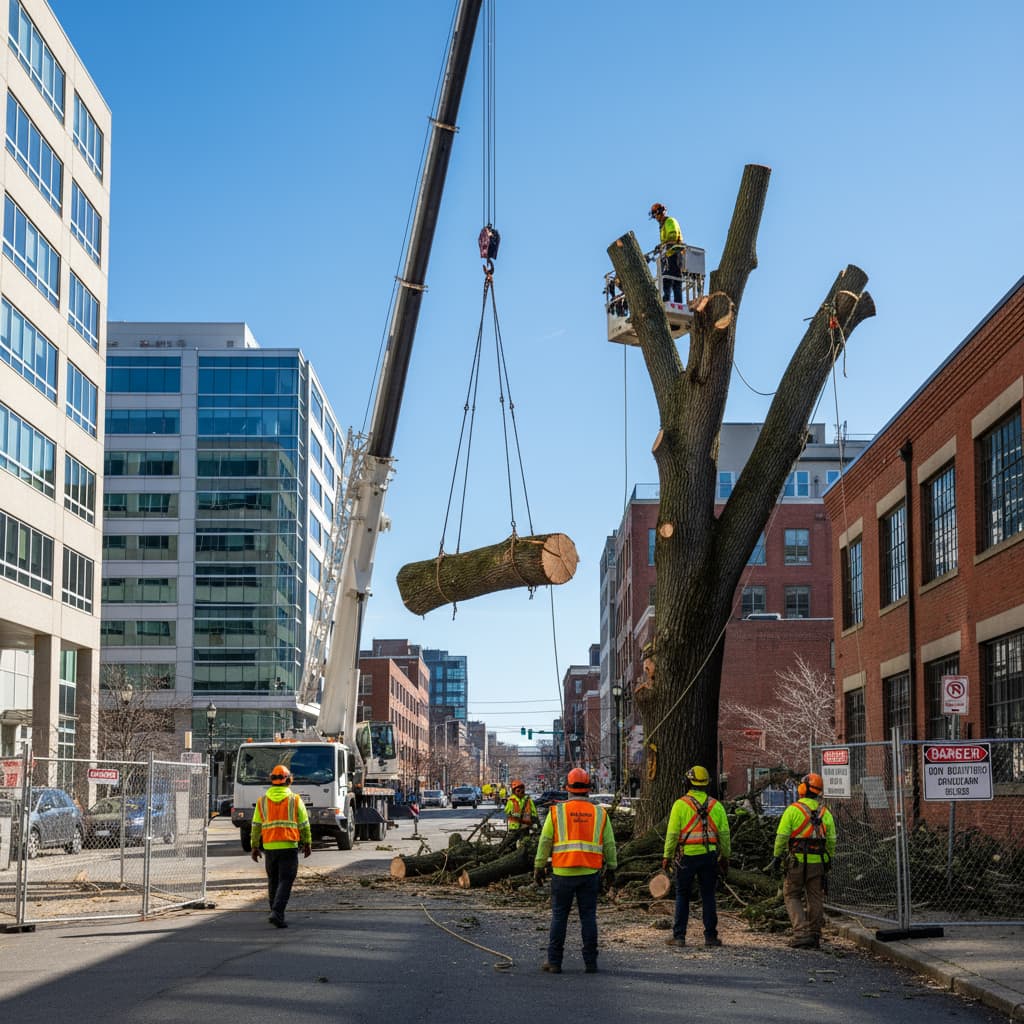
Any employee involved in commercial tree removal who performs work at heights greater than six feet must wear appropriate fall-protection systems, which may include a properly fitting harness, climbing rope rated for tree work, and a secure anchor point. All equipment must be inspected before each use and must meet the manufacturer’s specifications. Fall-protection systems are particularly important for work in areas with tall buildings, such as Winter Hill and East Somerville.
Power Line Safety Protocols
Tree removal near electrical lines is regulated and must be performed by trained and qualified line-clearance tree trimmers. If the work area is within ten feet of energized lines, the company must coordinate with utility providers and may need to request temporary power shut-offs for safe completion of the work, particularly in densely developed commercial corridors in Somerville.
Risk Management and Insurance Considerations
Commercial Liability Insurance
Due to the higher values of commercial properties and increased potential for extensive damage, commercial tree-removal operations are generally required to maintain substantially higher levels of liability insurance coverage than residential tree removal. Liability insurance must provide coverage for property damage, personal injury claims, and environmental damage. In the vicinity of high-value developments, such as Assembly Row, liability insurance coverage must be comprehensive.
Worker’s Compensation Requirements
All commercial tree-removal companies must purchase and maintain workers’ compensation insurance for their employees. Due to the dangers associated with tree work, such as falls, equipment-related injuries, and being struck by objects, it is extremely important to ensure that these employees receive adequate workers’ compensation should they become injured during their employment.
Bonding and Licensing
While commercial contractors are generally required to post bonds for large-scale projects, especially those that are contracted with municipalities or conducted on public property, licensing requirements vary based on the scope of the project. Depending upon the nature of the project, a contractor may be required to hold specialized licenses/certifications, such as certifications to work in proximity to utilities, handling hazardous materials, or operating in restricted areas.
Project Planning and Coordination
Site Assessment and Engineering
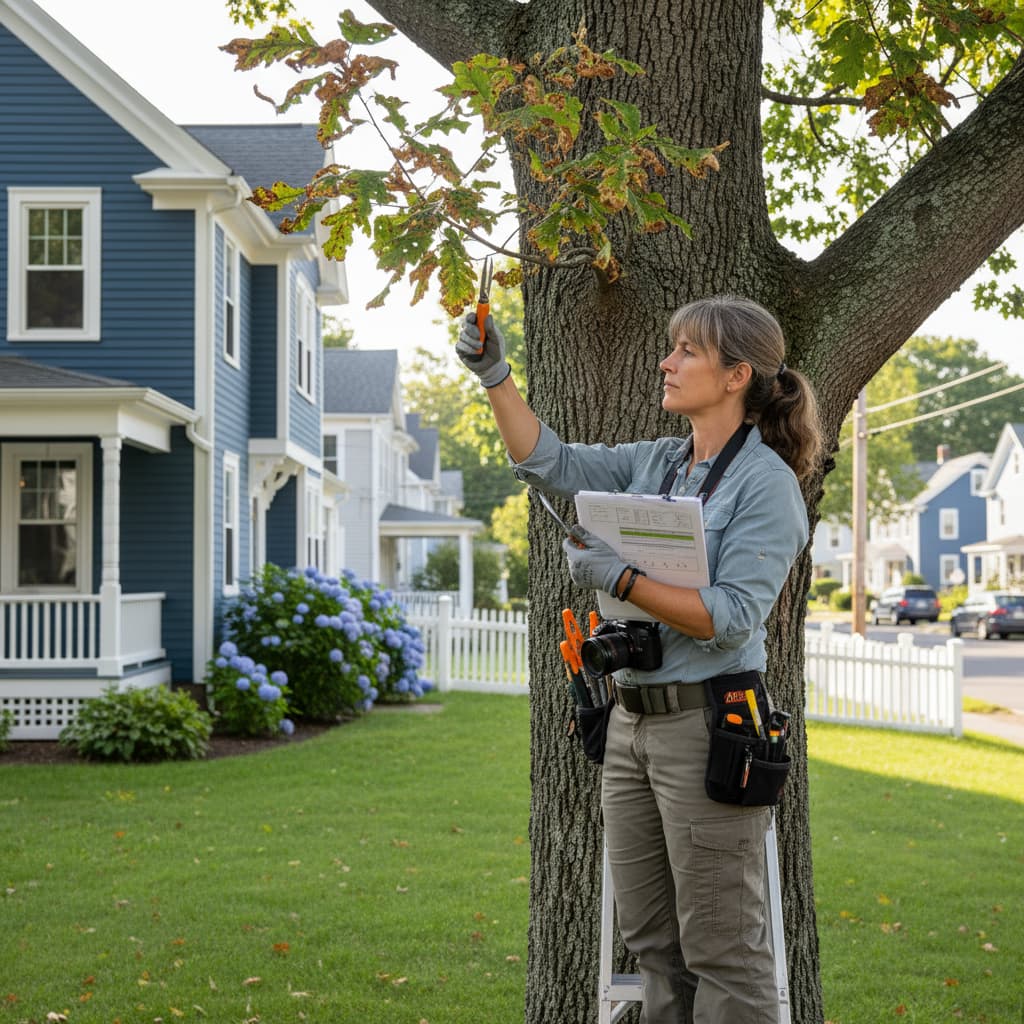
Before conducting a commercial tree-removal project, the site must be thoroughly assessed by engineers and/or other qualified professionals, including utility location, soil conditions, and access-route planning. For example, if a project is located in an area such as Magoun Square or Ball Square where access routes are limited, the project may require specialized equipment or phase the removal process. Engineering evaluations assist in identifying potential hazards and establishing safe work practices.
Traffic Management and Public Safety
In commercial areas, tree-removal projects often necessitate traffic control, pedestrian detouring, and coordination with local authorities. To conduct this type of operation, companies must obtain any necessary permits for lane closures, parking restrictions, and crane placements. Proper signage, barriers, and flaggers are required to ensure public safety during the operation.
Environmental Impact Mitigation
Depending on the size of the commercial tree-removal project, environmental-impact assessments may be required. This is particularly true for projects in environmentally sensitive areas, such as the Mystic River corridor or designated conservation zones. Environmental impacts of a commercial tree-removal project include dust control, noise management, and protecting existing vegetation; therefore, these issues must be incorporated into project planning.
Specialized Equipment and Techniques
Crane-Assisted Removal
To facilitate safe, efficient tree removal in confined-space locations, many commercial projects utilize crane-assisted removal techniques. This method provides minimal disturbance to the ground surface and enables the removal section to be precisely positioned. Before performing crane-assisted removal, companies must obtain additional permits, hire certified crane operators, and coordinate with utility companies to ensure adequate clearance.
Stump Grinding and Site Restoration
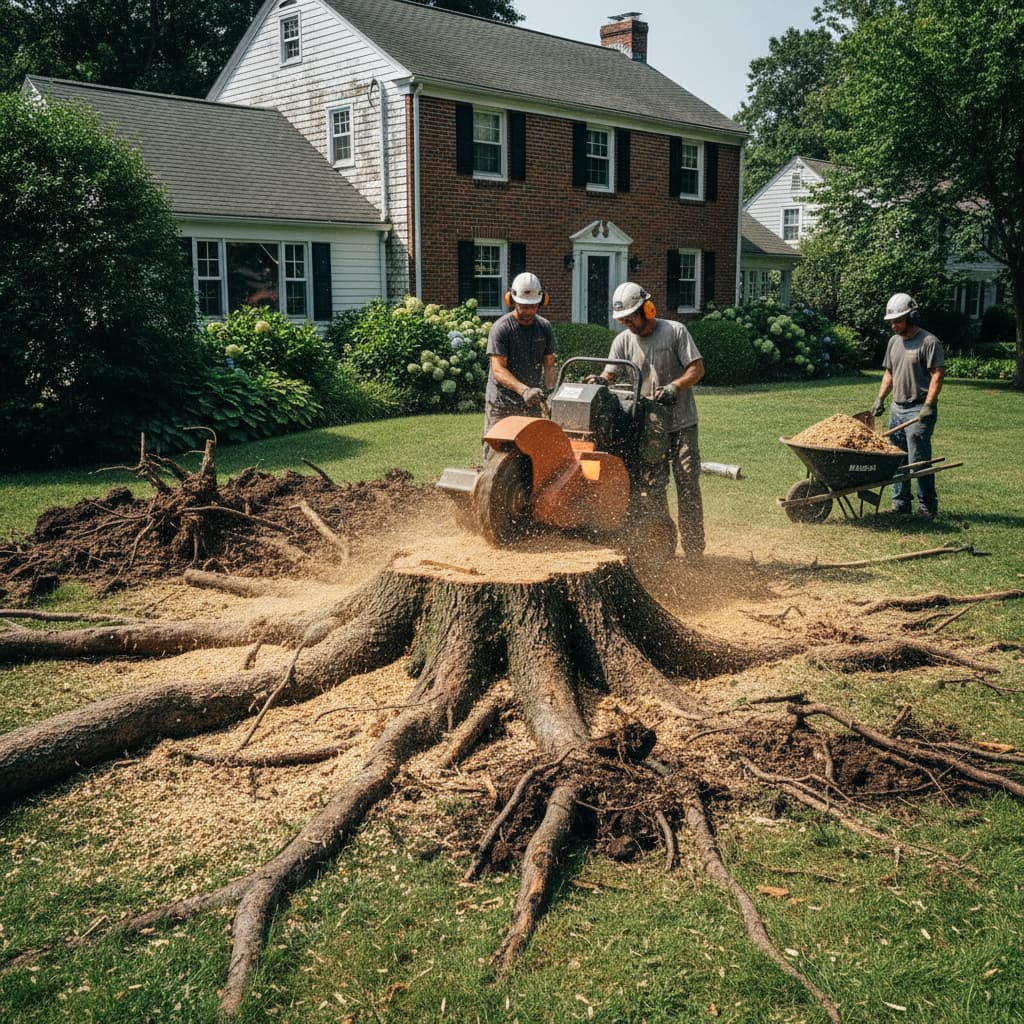
Following commercial tree removal, the stumps of the removed trees are usually completely removed and the site restored to allow for new construction or landscaping. Depending upon the requirements of the project, site restoration may include soil amendments, grading, and planting of replacement vegetation in accordance with approved plans. Aesthetic restoration of sites in visible areas, such as Teele Square, is particularly important.
Quality Assurance and Documentation
Compliance Monitoring
As a result of the complexity of commercial projects, commercial projects require a great deal of detailed documentation of all permit compliance, safety protocols, and environmental-protection measures. Commercial projects must also be regularly monitored by certified arborists to verify that the project is progressing according to approved plans and industry standards. Documentation is crucial in providing protection to all parties and facilitating the timely completion of a commercial project.
Post-Removal Monitoring
After the removal of trees, follow-up monitoring is performed to verify that replacement vegetation has established successfully and that all required mitigation measures have been taken. In some cases, commercial property owners may have ongoing responsibilities to perform maintenance of trees and report to the City to ensure compliance with permit conditions.
Selecting Your Commercial Tree Removal Company
Commercial tree removal requires an experienced contractor who understands both local regulations and federal safety requirements. When selecting a contractor for commercial tree removal, consider a contractor with a history of successful commercial projects, a contractor with sufficient licensing and insurance, and a contractor with knowledge of Somerville’s specific regulations. The complexity of commercial projects requires a contractor with the capability to manage all aspects of a project from permitting through final cleanup.
Professional Commercial Tree Removal Services Provided by Somerville Tree Masters
Somerville Tree Masters has over twenty years of experience providing commercial tree-removal services to businesses in Somerville and surrounding communities. Somerville Tree Masters has a vast understanding of the unique challenges associated with performing tree removal in Somerville’s commercial districts, including the regulations specific to Somerville and the logistics of urban tree removal. From permit applications, safety compliance, and coordination with City officials, Somerville Tree Masters manages every aspect of commercial tree-removal projects to ensure your project complies with all City regulations while minimizing the disruption to your business operations.
LATEST POSTS