Tree Health Assessment: What’s Really Included
Tree Health Assessment Somerville
A full tree health evaluation for a homeowner gives them a wealth of information about the current health, safety, and future potential of their trees. Many homeowners are unaware of how extensive and complex the process of having a tree professionally evaluated is until they go through it themselves. Somerville Tree Masters conducts a complete evaluation using a combination of visual examination methods and advanced diagnostics to provide homeowners with an accurate determination of the health of their trees and any necessary interventions.
Visual Inspection: The Foundation of Assessment
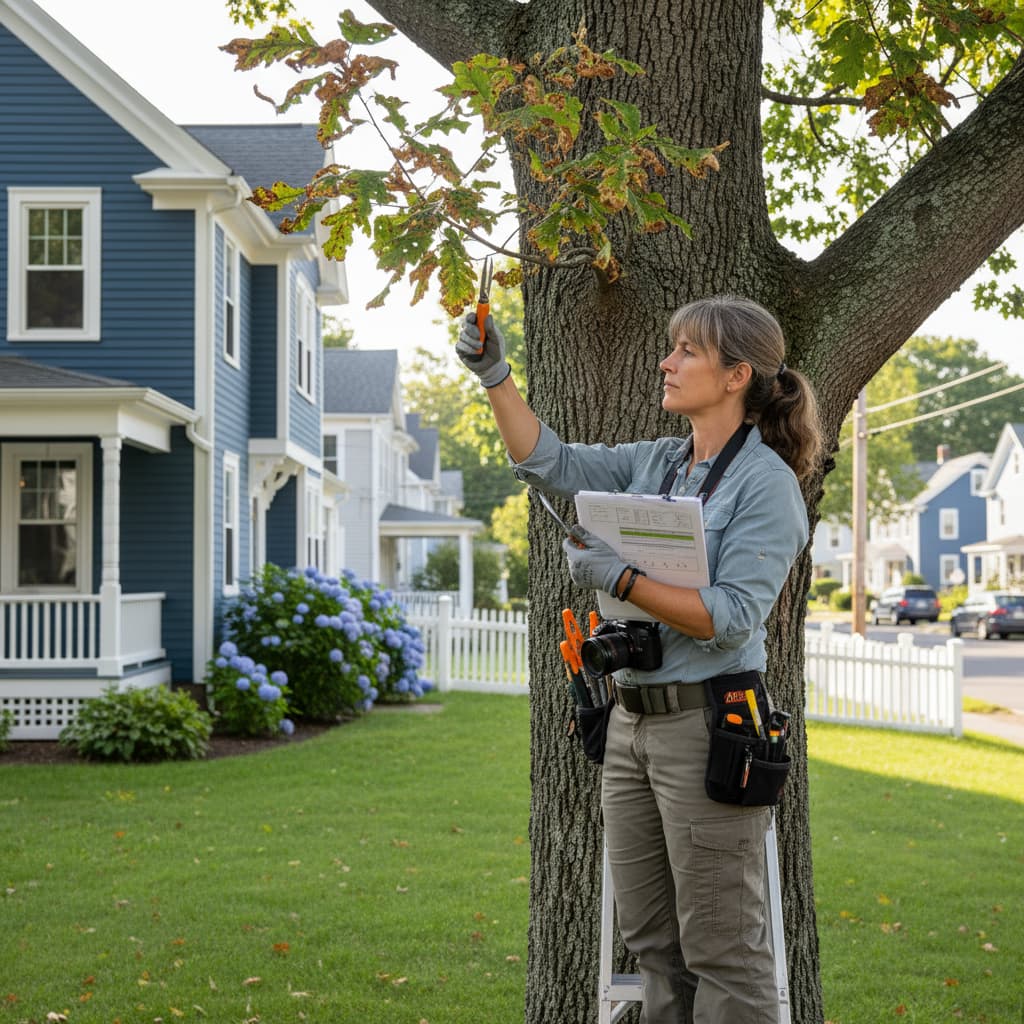
Visual inspection is the foundation of an assessment, because it is through the use of a systematic visual inspection that certified arborists can identify subtle signs of trouble that you would never see otherwise. This complete inspection evaluates all parts of the tree (from the root system to the crown), evaluates the condition of each part of the tree, and identifies possible problem areas.
Arborists evaluate the trunk of the tree to assess the condition of the bark, whether there are any cracks or cavities, evidence of insect infestation, and/or mechanical damage. They check for any discoloration patterns, unusual growths, and structural irregularities that could be indicators of internal problems or instability of the tree.
Crown/Branch Evaluation
During the assessment of the tree crown, arborists are taking a close look at the leaves, the leaf color, and the density and distribution of the leaves, which indicate the overall health of the tree. Arborists evaluate the architecture of the branches and examine them for proper angle of attachment to the trunk, signs of weakness, and/or disease/pest damage.
In addition, arborists will identify dead/dying branches within the crown of the tree as a hazard that requires immediate action. Arborists also take into consideration the entire canopy structure of the tree to evaluate its balance, proper weight distribution, and ability to withstand wind and storms.
Diagnostic Tools
Modern tree health assessments utilize advanced diagnostic tools to evaluate the internal condition of the tree and structural integrity that cannot be seen through a visual inspection alone. The data collected through these diagnostic tools is critical to understanding the true condition of the tree and ultimately determining the best course of action regarding the tree’s safety.
One such tool is resistograph drilling. Through resistograph drilling, arborists utilize specialized equipment to evaluate the internal condition of the tree by measuring the resistance encountered when drilling small holes into the trunk of the tree. Through this method, arborists can detect internal decay, cavities, and structural weaknesses without significantly damaging the tree.
Sonic Tomography for Internal Tree Imaging
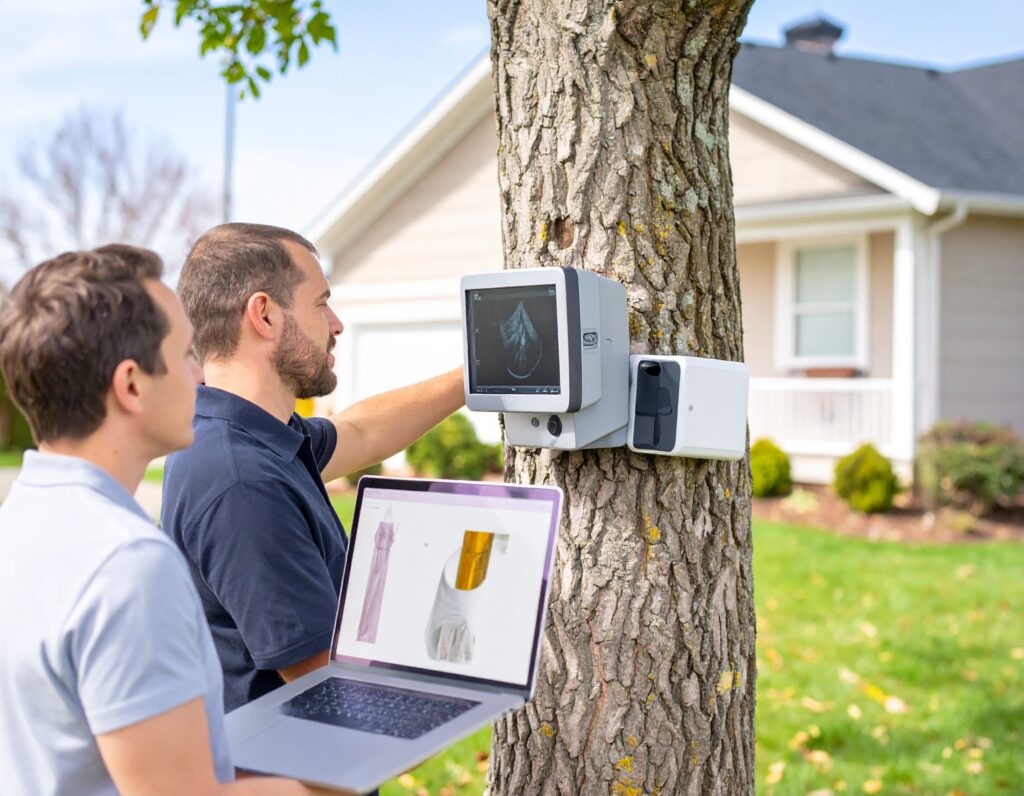
Sonic tomography is a new and innovative way to assess the internal structure of the tree through the use of sound waves. By placing sensors around the trunk of the tree, arborists can measure the time it takes for sound waves to pass through the tree and then create a colored image showing the solid wood vs. decaying/hollow sections of the tree. This non-destructive imaging technique creates a “tomogram,” which shows the extent and location of internal decay, allowing arborists to make informed decisions regarding the safety of the tree and treatment options. The sonic tomography test takes approximately 15 minutes to complete and provides arborists with a comprehensive internal analysis of the tree without damaging it.
Root System & Soil Analysis
An assessment of the tree’s health also includes a comprehensive review of the root system and soil conditions surrounding the tree, which directly impacts the health and stability of the tree. Arborists examine the visible portions of the root system, searching for evidence of physical damage, disease, and/or improper growth patterns.
Soil testing evaluates the pH levels, nutrient availability, soil compaction, and water-flow characteristics of the soil, which directly affect the health of the roots and overall vitality of the tree. Poor soil conditions are one of the most common causes of tree decline, and, therefore, this type of analysis is critical in the development of an effective treatment strategy.
Root Collar Excavation
If necessary, arborists will excavate the root collar to visually inspect the area where the trunk meets the root system. This allows arborists to evaluate structural problems that occur beneath the surface of the soil, such as girdling roots, buried root flares, and soil compaction, which negatively impact the health and stability of the tree.
The inspection of the root collar will allow arborists to identify structural problems occurring below the surface of the soil, which will be critical in determining the correct treatment options or assessing the long-term viability of the tree.
Pest/Disease Identification
Comprehensive tree health assessments include an evaluation of the potential presence of pests and diseases that are detrimental to tree health. Certified arborists have extensive knowledge of the types of pests and diseases that affect trees in Massachusetts, including regional-specific threats such as the emerald ash borer.
Identifying pest and disease issues early in the development stage will enable property owners to implement effective treatment strategies prior to the problems becoming permanent. Professional assessors will identify signs that may go unnoticed by the average homeowner, such as slight variations in leaf color, bark texture, and/or growth pattern.
Laboratory Testing & Analysis
If the visual inspection indicates that disease is present, arborists will collect tissue samples for laboratory testing to confirm the presence of a specific pathogen(s) and to determine the most effective treatment plan. The scientific methodology used to evaluate disease conditions will ensure that a correct diagnosis is made and a targeted treatment plan is developed.
Evaluation of fungal pathogens, bacteria, and viruses will provide definitive answers about disease conditions impacting trees. Laboratory testing results will guide the development of treatment plans and provide predictions of disease progression and treatment success rates.
Structural Integrity Evaluation
A comprehensive tree health assessment includes an evaluation of the structural integrity of the tree to identify potential risks of structural failure, which could endanger people and/or property. Arborists evaluate the attachment points of branches to the trunk, the condition of the trunk, and the general architectural configuration of the tree to identify signs of structural weakness.
Structural deficiencies in trees, such as included bark, codominant leaders, and excessive lean, require professional evaluations to determine the best course of action to manage the tree. An evaluation will identify these potential failures before the tree fails during a storm.
Risk Assessment Integration
Many tree health assessments incorporate formal risk assessments that apply industry standards to quantify the risk associated with hazardous conditions and recommend actions. A structured approach to risk assessment considers the condition of the tree, its location, and the potential consequences of damage.
Risk ratings will assist property owners in making informed decisions regarding tree management by enabling them to prioritize interventions based on the level of risk and potential for failure. In addition, a professional assessment will provide a documented record of the assessment, which will be valuable for insurance and liability purposes.
Stress Factors Evaluations
A comprehensive tree health assessment includes an evaluation of the environmental factors that are affecting the health of the tree. Arborists evaluate the degree to which the tree has been subjected to salt, air pollutants, construction-related damage, and/or climate stresses. Many of these environmental stressors can cause tree decline and impact the success of treatment efforts.
Trees in urban environments experience unique stress factors related to the urban environment, including restricted root zones, compacted soils, urban heat-islands, and de-icing salts. Assessments will identify these stressors and the effect they have on the tree’s health, and will inform the recommendations for managing the tree.
Site Condition Analysis
Professional assessors evaluate the growing conditions of the tree, including the amount of sunlight the tree receives, the drainage characteristics of the site, and the degree to which adjacent plants compete for resources. Poor growing conditions often limit the health of the tree regardless of what care measures are taken, and, therefore, this type of analysis is important for long-term planning.
Possible recommendations include modifying the site to improve growing conditions, selecting species for replacement planting that are suitable for the site, and recommending management strategies that work within the existing environmental limitations of the site.
Vigor/Growth Patterns Assessments
A tree health assessment includes an evaluation of the growth patterns and overall vigor of the tree to evaluate the tree’s vitality and its response to environmental conditions. Arborists evaluate the annual growth increments of the tree, the quality and quantity of the leaves, and the seasonal growth patterns of the tree.
Declines in growth rate or unusual growth patterns may indicate underlying health problems that should be addressed. Professional assessments will identify these trends and provide recommendations to promote tree health and vigor.
Historical Growth Patterns Evaluations
As applicable, arborists will evaluate the historical growth patterns of the tree utilizing core samples or other methods to assess long-term tree-health trends. Historical growth-pattern evaluations will help arborists forecast future performance and assist arborists in developing effective care plans.
Through growth-pattern evaluations, arborists will understand how the tree has responded to previous environmental stresses, management activities, and/or disease conditions. The data collected will be invaluable in developing effective care plans to promote the long-term health of the tree.
Treatment Recommendations and Planning
Following a comprehensive evaluation, certified arborists develop detailed treatment recommendations that address the problems identified and promote the long-term health of the tree. Treatment recommendations are prioritized based on the urgency and potential success of the treatment.
Treatment recommendations may include pruning strategies, soil amendments, pest-control measures, tree-disease treatment programs, and structural support systems. Professional assessments take into account the species of the tree, site conditions, and owner goals.
Follow-Up Monitoring Programs
A professional tree health assessment often includes recommendations for follow-up monitoring to evaluate the effectiveness of treatment and to identify potential emerging problems. Follow-up monitoring will continue to evaluate the health of the tree over time to provide timely interventions when necessary.
The frequency of follow-up monitoring varies based on the tree’s condition, treatment applied, and the risk factors involved. Some trees may require annual assessments, while others may only require assessments every three to five years, depending on the tree’s health status.
Documentation & Reporting
Professional assessments conclude with comprehensive documentation, including detailed findings, photographs, and specific treatment recommendations. Documentation and reporting provide valuable records for insurance purposes, litigation purposes, and as a reference for future evaluations.
Reports typically include tree condition ratings, identified problems, recommended treatments, and the time-frame for implementing those treatments. Documentation and reporting will provide property owners with valuable information to make informed investment decisions regarding tree care.
Cost/Benefit Analyses
Professional reports often include a cost/benefit analysis comparing the costs of treating the tree with the costs of removing the tree and replacing it with another tree. This comparison will provide property owners with valuable information to compare the value of preserving the tree versus replacing the tree with a younger tree.
Long-term value considerations include the value of energy savings, enhanced property values, and environmental benefits provided by mature trees as opposed to newly planted trees.
LATEST POSTS